
Published: September 21, 2026 | Updated: September 21, 2026
The latest US-Iran war developments are drawing renewed global attention as Iran warns it could retaliate against any new American attack, while U.S. President Donald Trump says Washington is considering its options and remains open to diplomacy. Meanwhile, fighting involving Iran-backed Houthi forces is adding to wider regional tensions.
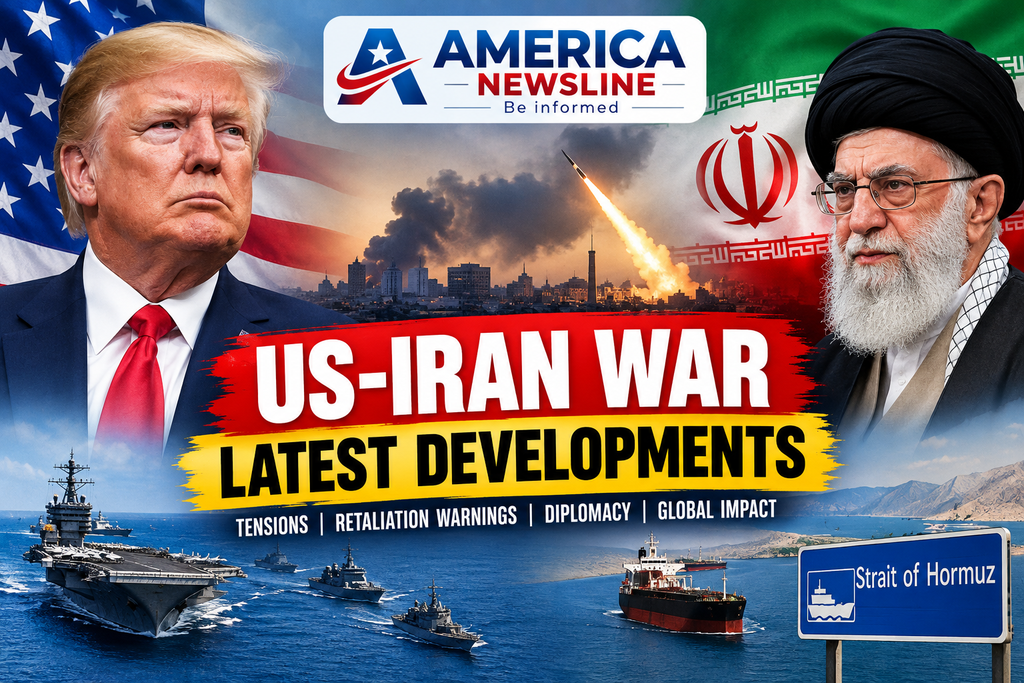
US-Iran War Latest News
The conflict between the United States and Iran remains highly volatile, with fresh warnings from Tehran coinciding with discussions in Washington about the next phase of the confrontation.
Iran’s military said it had received information indicating that the United States could be preparing to resume strikes against Iran. Tehran warned that any renewed attack could trigger retaliation against U.S. forces and interests in the Middle East.
At the same time, diplomatic efforts have not completely disappeared. Qatar is continuing to mediate between Washington and Tehran, while the upcoming United Nations General Assembly in New York could provide an opportunity for further diplomatic contacts.
Iran Warns of Wider Regional Escalation
Iran’s Islamic Revolutionary Guard Corps has warned that a new U.S. assault could result in an expansion of the conflict.
According to Associated Press reporting, an IRGC spokesman said Iran could introduce new weapons and expand the geographical scope of the conflict if hostilities intensify.
CBS also reported that Iranian officials have warned of an expansion of the war if the United States launches another major attack.
These statements are warnings rather than confirmation that a new U.S. attack has begun.
Trump Says Washington Is Considering Its Options
President Donald Trump said Sunday that he was in a decision-making phase regarding Iran.
According to CBS News, Trump discussed several possible approaches, including additional military pressure, economic pressure and negotiations. He also indicated that he could be open to meeting Iranian President Masoud Pezeshkian during the U.N. General Assembly in New York this week.
That leaves the immediate direction of U.S. policy uncertain, with military and diplomatic possibilities both being discussed.
Qatar Pushes for Renewed US-Iran Talks
Diplomatic channels remain active despite the military threats.
Qatar has been communicating with both sides in an effort to revive negotiations. Al Jazeera reported that Iranian officials had conveyed conditions for renewed talks through mediators, including demands related to the war, U.S. attacks, frozen Iranian funds and sanctions-related issues.
Iranian Foreign Minister Abbas Araghchi also traveled toward New York for the United Nations General Assembly, adding to speculation about possible diplomatic activity around the international gathering.
Strait of Hormuz Becomes a Major Global Concern
One of the biggest international consequences of the conflict is the disruption around the Strait of Hormuz, a critical route for global energy shipments.
Reuters reported that only 17 commodity vessels crossed the Strait of Hormuz over the weekend, compared with 37 the previous week and a pre-war average of roughly 125 vessels per day.
The reduced shipping traffic is being closely watched by governments, energy companies and financial markets because the waterway is central to global oil and gas transportation.
Oil Prices React to Diplomatic Hopes
Despite the continuing conflict, oil prices moved lower on Monday amid hopes that diplomacy could make progress and that Saudi exports could partially recover.
Reuters reported that Brent crude briefly moved toward the $100-per-barrel level, while U.S. crude also declined during Monday trading.
However, energy-market risks remain significant because continued disruption around Gulf shipping routes could affect oil, gas, fuel and transportation costs internationally.
Yemen and Houthi Fighting Add Another Layer of Risk
The broader Middle East conflict is also being affected by fighting in Yemen.
Reuters reported Monday that Houthi forces were pushing to seize strategic high ground in Yemen, while the United States was warning that the situation could escalate rapidly.
The developments have raised additional concerns about shipping routes around the Red Sea and Gulf region.
The International Organization for Migration reported that nearly 130,000 people had been displaced in Yemen amid the worsening conflict there, according to CBS News.
U.S. Embassies Issue Security Alerts
U.S. diplomatic missions across parts of the Middle East have also issued security warnings.
CBS News reported that U.S. embassies in the region advised Americans to exercise caution and prepare for possible travel disruptions because of the potential for further escalation.
For Americans currently in the region, official U.S. government travel and security advisories remain the appropriate source for location-specific instructions.
What Happens Next?
The immediate future of the US-Iran conflict remains uncertain.
Three developments will be particularly important to watch:
1. Any new U.S. military action:
Iran has warned that another American attack could trigger retaliation.
2. Diplomatic activity at the United Nations:
Trump and Iranian officials are expected to be in New York around the U.N. General Assembly, creating a potential opportunity for diplomatic contacts.
3. Strait of Hormuz shipping:
Continued disruption could have consequences for global energy markets and international trade.
US-Iran War: What Readers Should Know
The current situation should not be interpreted as confirmation that a new full-scale U.S. offensive has already started. Reports on September 21 primarily describe warnings of possible renewed strikes, threats of retaliation, continuing regional fighting and simultaneous diplomatic efforts.
Because the situation is changing rapidly, developments involving military operations, shipping and diplomacy can change within hours.
Frequently Asked Questions
Is the US-Iran war still ongoing?
The broader conflict and regional hostilities remain active, with continuing military tensions and fighting involving Iran and regional actors.
Is the U.S. preparing to attack Iran again?
Iranian military officials say they have received information suggesting the United States could resume strikes. This is an Iranian claim and does not independently confirm that a new U.S. attack has begun.
Could Iran retaliate against U.S. forces?
Iranian officials have publicly warned of retaliation against U.S. forces and interests if new attacks occur.
Why is the Strait of Hormuz important?
It is a major global energy-shipping chokepoint. Reduced vessel traffic through the strait is therefore being closely monitored by energy markets and governments.
Are the U.S. and Iran still talking?
Diplomatic channels remain active, with Qatar mediating and potential diplomatic contacts surrounding the U.N. General Assembly.
Bottom Line
The latest US-Iran developments point to a tense combination of military warnings, regional fighting, shipping disruption and diplomatic maneuvering. Iran is warning of retaliation if the United States launches new attacks, while Washington is weighing its options and diplomatic channels remain open.
For readers following the conflict, the key developments to monitor are any confirmed U.S. military action, Iranian retaliation, Strait of Hormuz shipping, oil prices, and diplomatic talks in New York.
America Newsline will continue to follow verified developments and update this story as new information becomes available.