
Published: September 22, 2026
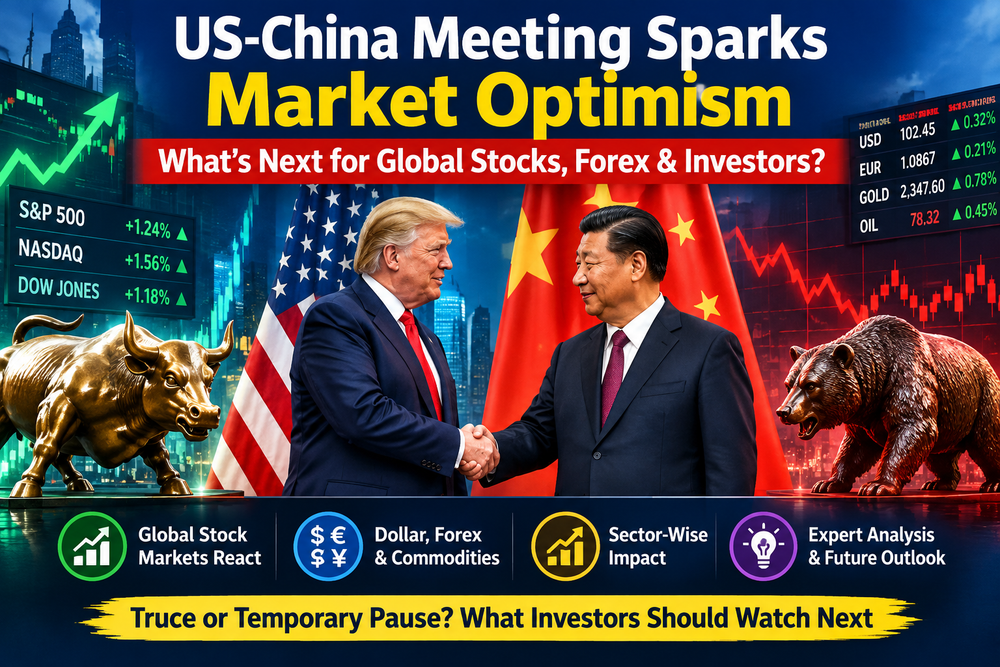
US-China Meeting Puts Global Stock Markets in Focus
Global financial markets moved higher Monday as investors reacted to constructive signals from the latest U.S.-China economic and trade discussions while looking ahead to an expected meeting between U.S. President Donald Trump and Chinese President Xi Jinping.
U.S. Treasury Secretary Scott Bessent described the latest discussions with Chinese Vice Premier He Lifeng as a “very successful engagement.” The talks covered trade, artificial intelligence and other economic issues ahead of the expected Trump-Xi meeting in Washington.
The market reaction was supported by several factors at the same time, including lower oil prices, retreating Treasury yields and renewed strength in technology and semiconductor stocks.
Why investors are watching the US-China meeting
The world’s two largest economies remain closely connected through:
- Global trade
- Semiconductor supply chains
- Artificial intelligence
- Critical minerals and rare earths
- Manufacturing
- Agricultural exports
- Technology investment
- Tariff policy
Any change in the relationship could therefore affect companies and sectors far beyond the United States and China.
Wall Street Rallies as Technology Stocks Lead
U.S. stocks finished Monday’s session substantially higher.
According to Reuters, the Dow Jones Industrial Average gained about 0.5%, the S&P 500 rose 1.05%, and the Nasdaq Composite climbed 1.62% during the session. AP reported an even stronger closing move, with the S&P 500 gaining approximately 1.5%, the Nasdaq 2.2% and the Dow 0.7%. Differences reflect the timing and market-data snapshots used by the outlets.
Technology and semiconductor companies were among the major market movers.
AMD jumped strongly and reached a $1 trillion market capitalization, while Intel also posted a substantial gain. Other AI-related technology shares benefited from renewed investor interest in artificial-intelligence spending.
The moves underline how closely the stock market is currently watching both the AI investment cycle and U.S.-China technology relations.
AI Becomes a Major Issue in US-China Discussions
One of the most closely watched developments from the latest talks was the discussion of an AI safety notification mechanism.
The United States proposed creating a bilateral AI dialogue that could address national-security-related AI incidents and improve communication between Washington and Beijing.
This is significant for investors because the U.S. and China are simultaneously competing and cooperating in artificial intelligence.
The outcome of future discussions could affect:
- Semiconductor companies
- AI infrastructure companies
- Data-center investment
- Advanced computing
- Chip exports
- Cloud technology
- Technology supply chains
However, the latest talks did not resolve every major technology dispute. Reuters reported that high-end AI chip export controls were not discussed during the latest session.
Tariffs Remain One of the Biggest Market Risks
Trade policy remains another major focus.
The U.S. and China are discussing possible tariff-related arrangements, including a mechanism that could potentially cover reductions on certain non-strategic goods.
For stock-market investors, tariffs matter because they can influence:
Company costs → consumer prices → inflation → interest rates → corporate profits → stock valuations
A reduction in trade uncertainty could therefore be viewed by investors as supportive for companies with significant international supply chains.
At the same time, investors should distinguish between negotiations and finalized agreements. The latest discussions have produced encouraging signals, but several major issues remain unresolved.
China and Hong Kong Stocks Also Move Higher
Asian markets also responded positively to the latest developments.
China’s Shanghai Composite was reported higher during Monday trading, while the CSI 300 and technology-focused indexes also advanced. Hong Kong’s Hang Seng Index gained as investors assessed the possibility of an extension to the existing U.S.-China trade truce.
Technology, healthcare and property stocks were among the areas showing strength in Chinese markets.
The market response indicates that investors are closely monitoring whether diplomatic engagement produces concrete economic measures.
Oil Prices Are Another Major Factor Behind the Stock Rally
The U.S.-China discussions were not the only reason stocks moved higher.
Oil prices also fell sharply, providing additional support to equity markets.
Reuters reported that crude prices declined more than 3% Monday, while AP reported Brent crude falling approximately 3.4% to around $100.29 per barrel. The decline also helped push the U.S. 10-year Treasury yield lower toward 4.97%.
Lower energy prices can potentially reduce inflation pressure and operating costs for some companies.
However, oil remains highly sensitive to geopolitical developments, particularly developments affecting Middle Eastern supply routes.
Why Falling Treasury Yields Matter for Stocks
Another important market signal was the decline in Treasury yields.
The 10-year U.S. Treasury yield moved below 5% after recently trading above that level.
Lower bond yields can influence equity valuations because they affect the relative attractiveness of stocks versus bonds and can reduce the discount rate applied to future corporate earnings.
This is particularly relevant for growth and technology stocks, whose valuations can be more sensitive to changes in interest rates.
What Could Happen to Technology Stocks?
Technology stocks remain at the center of the market story.
The latest rally included strong performances from semiconductor and AI-related companies. AMD, Intel and other chip stocks benefited from renewed optimism around AI demand.
But investors are also watching the policy side of the AI industry.
The United States and China remain competitors in advanced computing and artificial intelligence. Any changes involving:
- AI chip exports
- Semiconductor manufacturing
- Rare-earth supplies
- Technology restrictions
- AI safety agreements
- Cross-border investment
could influence individual technology companies and broader semiconductor indexes.
Morgan Stanley’s recent market analysis also identified trade, rare earths and AI as key issues for investors watching the Trump-Xi meeting.
What About the S&P 500?
The S&P 500 moved closer to its record level during Monday’s rally.
AP reported that the index ended the session within roughly 0.4% of its all-time high.
That makes the upcoming U.S.-China discussions particularly important for market sentiment.
Investors will be watching whether diplomatic progress produces actual policy changes or whether the current optimism remains primarily expectations-driven.
Key S&P 500 factors to watch
- U.S.-China trade negotiations
- Tariff announcements
- AI and semiconductor policy
- Federal Reserve interest-rate guidance
- Oil prices
- Treasury yields
- Corporate earnings
- Middle East geopolitical developments
What Could Move Markets After the Trump-Xi Meeting?
The market reaction may depend less on diplomatic language and more on whether the meeting produces specific economic commitments.
Potential market-moving areas include:
Tariffs: Any announcement involving tariff rates could affect companies exposed to Chinese manufacturing and U.S. imports.
Rare earths: Supply commitments could matter for electronics, automobiles, defense and advanced technology manufacturers.
Semiconductors: Changes in export restrictions could have implications for chipmakers and AI companies.
Agriculture: Increased Chinese purchases of U.S. agricultural products could affect agricultural companies and commodities.
AI: Greater cooperation or new restrictions could affect the rapidly expanding AI industry.
Supply chains: Greater certainty could influence companies planning manufacturing and sourcing decisions.
India Investors: Why the US-China Meeting Matters
The developments are also relevant to Indian investors because global markets can influence Indian equities through several channels.
1. Technology sector
U.S. technology stocks often influence global investor sentiment toward technology companies, including India’s IT sector.
2. Oil prices
India is a major importer of crude oil. Changes in global oil prices can therefore influence inflation, the rupee and corporate costs.
3. Foreign institutional flows
Changes in global risk appetite can affect foreign portfolio flows into emerging markets, including India.
4. Rupee-dollar movements
Major changes in the U.S. dollar, Treasury yields and global trade expectations can influence the Indian rupee.
5. Manufacturing and supply chains
Any major changes in U.S.-China supply-chain relationships could create opportunities and challenges for companies operating across Asian manufacturing networks.
US-China Meeting: Bullish Signals vs Remaining Risks
| Market Factor | Latest Development | Potential Market Relevance |
|---|---|---|
| U.S.-China talks | Described positively by U.S. officials | Could reduce short-term trade uncertainty |
| AI | Bilateral AI dialogue discussed | Important for technology and semiconductor stocks |
| Tariffs | Further discussions remain underway | Major risk for global supply chains |
| Rare earths | Part of broader negotiations | Important for manufacturing and electronics |
| Oil | Prices declined sharply | May ease inflation pressure |
| Treasury yields | 10-year yield fell below 5% | Relevant to equity valuations |
| S&P 500 | Moved close to record territory | Shows strong recent risk appetite |
| China stocks | Major indexes advanced | Reflects expectations around trade stability |
What Investors Should Watch Next
The upcoming Trump-Xi meeting is likely to keep global markets focused on concrete developments rather than headlines alone.
Investors should monitor official announcements concerning:
- Trade truce extensions
- Tariff changes
- Rare-earth exports
- Semiconductor restrictions
- AI cooperation
- Agricultural purchases
- U.S. investment commitments
- Supply-chain agreements
The distinction between proposals, negotiations and finalized agreements will be particularly important.
Bottom Line: Markets Are Watching for Concrete Results
The latest U.S.-China discussions have provided a more constructive backdrop for global markets, while falling oil prices and Treasury yields have provided additional support to equities.
Wall Street’s latest rally was led by technology and semiconductor stocks, while Chinese and Hong Kong equities also benefited from expectations of greater stability in U.S.-China economic relations.
However, major issues—including tariffs, semiconductor controls, critical minerals and technology competition—remain unresolved.
For investors, the next major market catalyst will be whether the upcoming Trump-Xi discussions produce specific and measurable economic commitments.
Frequently Asked Questions
Is the US-China meeting affecting the stock market?
Yes. Investor sentiment improved following constructive U.S.-China discussions, although the stock-market rally was also influenced by falling oil prices, lower Treasury yields and strength in AI and semiconductor stocks.
Why are technology stocks rising?
AI-related demand, semiconductor strength and optimism surrounding U.S.-China discussions contributed to recent gains in technology shares. AMD and Intel were among notable semiconductor movers.
What is the biggest issue investors are watching?
Trade and tariff policy remain central, alongside AI regulation, semiconductor restrictions and critical-mineral supply chains.
Will US-China talks affect Indian stocks?
Potentially. Changes in global risk sentiment, crude oil prices, foreign investment flows, technology-sector sentiment and currency markets can all influence Indian equities.
What should investors watch after the Trump-Xi meeting?
Investors can monitor official announcements concerning tariffs, trade, rare earths, AI, semiconductors, agricultural purchases and supply-chain arrangements.