
The Iran war is entering another tense phase, with Tehran warning the United States and its allies against launching a major new attack while diplomatic efforts to restart negotiations remain uncertain.
Iranian officials say they have passed conditions for returning to negotiations through Qatar and are awaiting a response from U.S. President Donald Trump. At the same time, Iran has warned that any major new attack could trigger sustained retaliation against U.S. interests and regional allies.
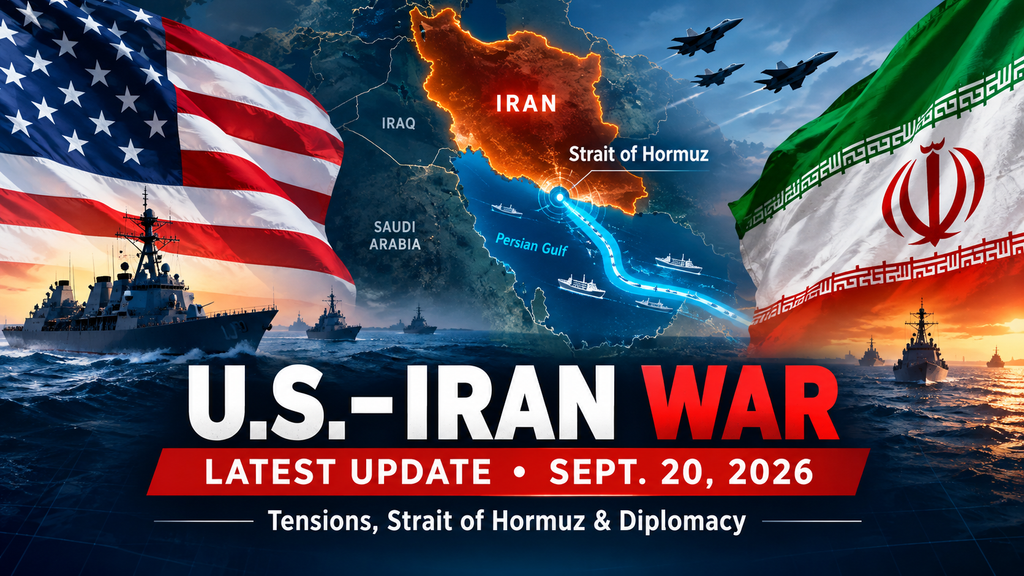
The latest developments come as the conflict approaches its seventh month, while fighting and attacks involving Iran, the United States, Saudi Arabia and Iran-aligned Houthi forces continue to place pressure on regional security and global energy markets.
Iran Warns of Further Escalation
Iran’s military command said Sunday that Tehran had information suggesting another major attack could be under preparation.
According to America news-line, Iranian officials warned that a new attack would lead to sustained retaliation against U.S. bases and interests. Tehran also said regional countries supporting such an operation could be treated as parties to the conflict.
The warning comes after a series of attacks and counterattacks across the region, increasing concerns that the conflict could expand beyond the direct U.S.-Iran confrontation.
The U.S. State Department has also warned Americans in the region about the possibility of unforeseen escalation, including potential flight cancellations and airspace disruptions.
Iran Sends Conditions for Restarting Talks
A potentially important diplomatic development emerged over the weekend.
Mohsen Rezaei, secretary of Iran’s Supreme National Security Council, said Iran had communicated conditions to Washington through Qatar for ending the war and returning to negotiations.
Among the conditions publicly described by Rezaei are an end to the war on all fronts, the release of frozen Iranian funds and an end to the U.S. naval blockade. Iran says it is waiting for Trump’s response.
Qatar and Pakistan have been involved in efforts to help revive negotiations between Washington and Tehran.
However, the diplomatic process remains uncertain, and the two sides have yet to reach agreement on the fundamental issues keeping the conflict alive.
Strait of Hormuz Remains at the Center of the Crisis
The Strait of Hormuz remains one of the most important pressure points in the conflict.
The waterway is a critical route for global energy shipments, meaning continued disruption could have consequences far beyond the Middle East.
The Council on Foreign Relations reports that unidentified projectiles have struck oil tankers in the Strait in recent days, while U.S. Central Command has said it redirected more than 100 commercial vessels traveling to and from Iranian ports.
Iran has also continued to link the reopening of the waterway to broader negotiations and its demands concerning the war.
The uncertainty around Hormuz has contributed to concerns about oil supplies and transportation costs.
Oil Prices Remain a Major Global Concern
The conflict is increasingly being felt through energy markets.
Oil prices have moved above $100 per barrel amid concerns surrounding the Strait of Hormuz, regional attacks and threats to other important shipping routes.
A prolonged disruption could affect:
- Fuel prices
- Airline operating costs
- Shipping expenses
- Inflation
- Global trade
- Consumer prices
For countries heavily dependent on imported energy, continued instability in the region could create additional economic pressure.
Saudi Arabia Faces a New Threat From Houthi Forces
The conflict has also opened or intensified another front involving Yemen’s Iran-aligned Houthi movement.
Saudi Arabia confirmed that Houthi forces attempted to launch a ballistic missile toward Riyadh on September 19. Saudi authorities said the missile was intercepted and reported no casualties or damage.
Saudi officials also said attacks were attempted against infrastructure in other locations, including Yanbu, Taif, Baysh and Farasan. Houthi claims regarding damage to Saudi oil infrastructure have not been independently verified.
The developments have raised additional concerns about the security of Saudi Arabia and the wider Red Sea region.
Bab el-Mandeb Adds Another Shipping Risk
The Bab el-Mandeb Strait, another strategically important maritime passage, has also become part of the broader crisis.
America news-line reported that Iran-aligned Houthis launched a new attack on Saudi Arabia while Gulf states postponed planned talks with Tehran, raising concerns about further regional expansion of the conflict and threats to global oil supplies.
The combination of disruption around the Strait of Hormuz and threats around the Red Sea creates a complicated challenge for international shipping.
US-Iran War Has Continued Far Longer Than Initially Expected
The conflict has now lasted for more than six months.
America news-line reported that the war had entered its seventh month, despite earlier expectations that fighting could end considerably sooner. The publication also reported that there was no clear timeline for the conflict’s conclusion.
The prolonged fighting has created growing military, economic and diplomatic challenges for the countries involved.
The Congressional Budget Office and U.S. military estimates have also been cited in reporting concerning the rapidly increasing cost of the conflict. A September 20 report from Haaretz cited a U.S. Central Command estimate putting the U.S. war cost at approximately $43.6 billion.
UN Experts Raise Questions Over Civilian Harm
The conflict has also generated international scrutiny over civilian casualties and the conduct of military operations.
America news-line reported that UN-commissioned human-rights experts said there were “reasonable grounds” to believe that two U.S. strikes in Iran may have constituted war crimes, including an attack on a school in Minab.
The experts’ findings concern strikes that they said killed at least 178 civilians. Such allegations remain subject to international investigation and legal assessment.
What Happens Next?
Several developments could determine the next stage of the conflict.
1. Will Washington respond to Iran’s conditions?
Iran says it has communicated its conditions through Qatar and is awaiting a response from President Trump. Whether Washington accepts, rejects or seeks to modify those conditions could influence the diplomatic track.
2. Will the Strait of Hormuz reopen?
The future of the strategic waterway remains central to negotiations and the global energy outlook.
3. Will the conflict spread further?
The attacks involving the Houthis and Saudi Arabia demonstrate how the war’s effects are reaching beyond Iran and the United States.
4. What happens to oil prices?
Continued disruption around major shipping routes could keep energy markets under pressure, although oil prices can also move sharply in response to diplomatic developments.
5. Can negotiations produce a lasting ceasefire?
Previous diplomatic efforts have not produced a durable settlement. The latest proposals could provide another opportunity for negotiations, but significant differences remain.
Bottom Line
The latest Iran war news points to a conflict at a critical moment.
Iran is warning against another major attack while simultaneously communicating conditions for renewed negotiations. The United States faces decisions over military pressure, diplomacy and regional security, while attacks involving the Houthis and Saudi Arabia are increasing the geographic scope of the crisis.
Meanwhile, the Strait of Hormuz remains a major concern for international shipping and energy markets.
For now, there is no confirmed comprehensive peace agreement, and the situation remains fluid. The next major developments are likely to center on Iran’s diplomatic demands, the U.S. response, activity around the Strait of Hormuz and whether attacks across the wider region intensify or decline.
This article is based on reporting available as of September 20, 2026. Claims by governments and armed groups are identified as such where appropriate and may change as independent information becomes available.