
Fed lifts benchmark rate to 3.75%–4%; dollar strengthens, Treasury yields rise and Wall Street retreats
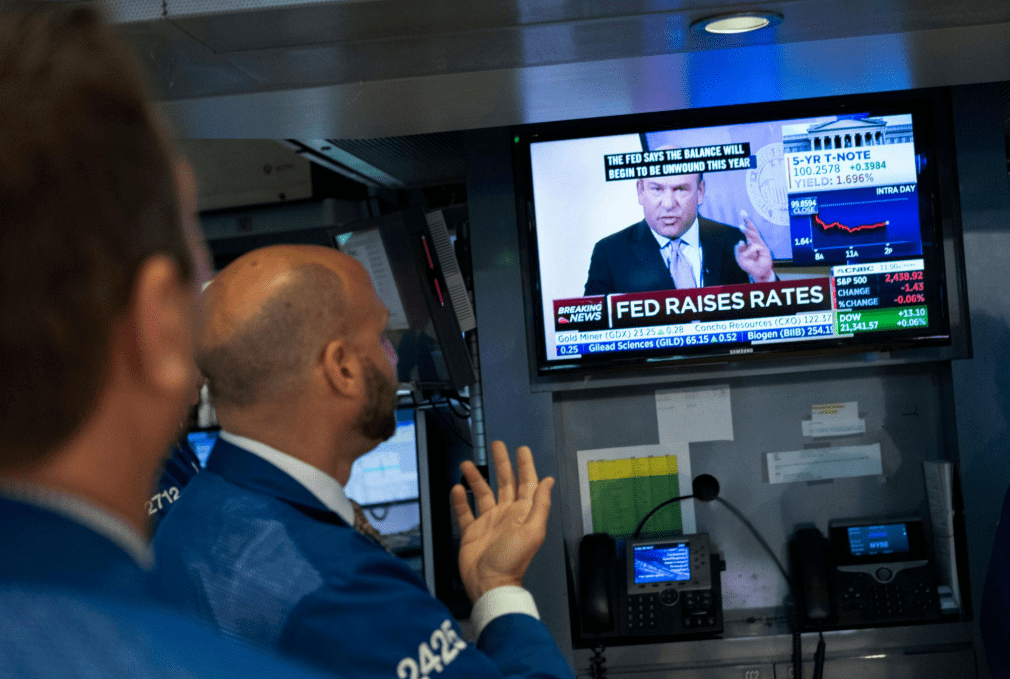
WASHINGTON — September 17, 2026: The U.S. Federal Reserve has raised its benchmark interest rate for the first time in more than three years, putting financial markets on alert for the possibility of additional tightening as policymakers continue to confront elevated inflation.
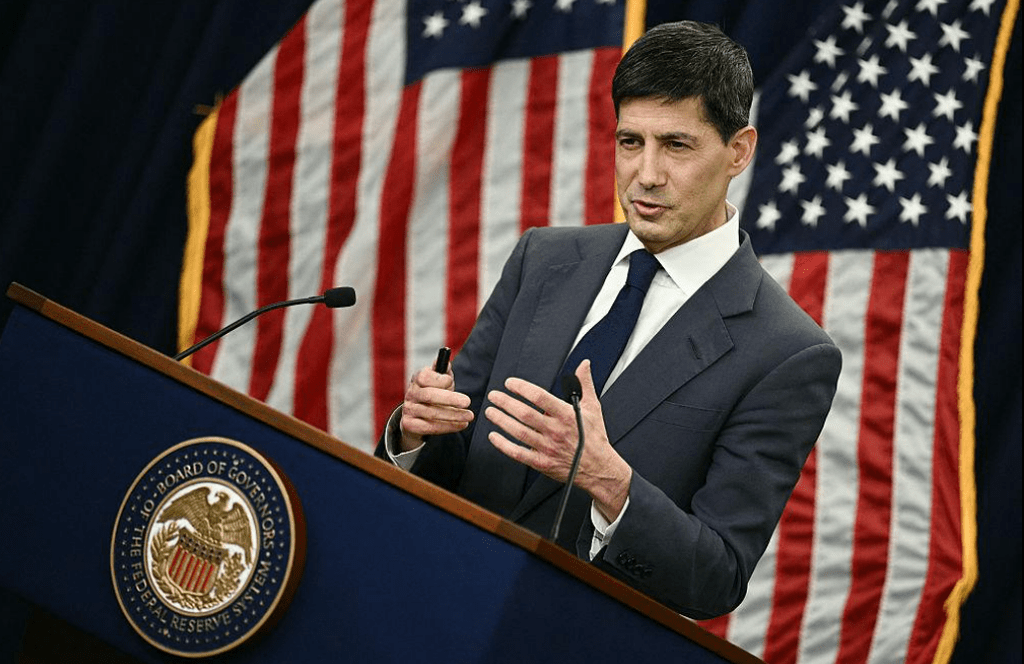
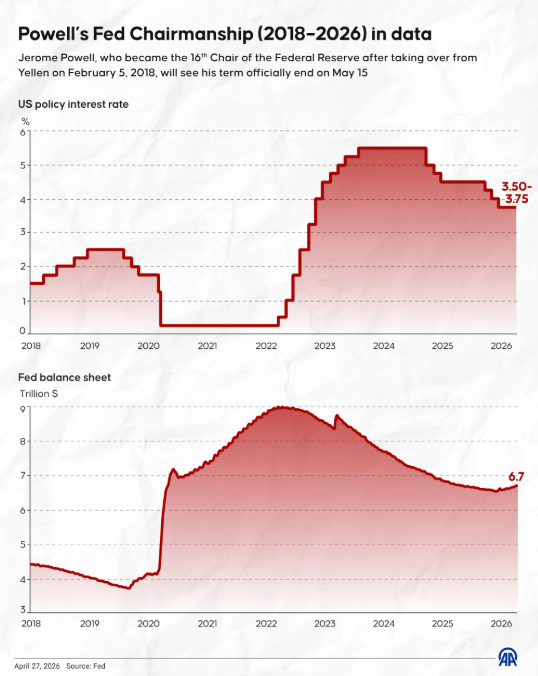
The Federal Open Market Committee voted unanimously on Wednesday to increase the federal funds target range by 25 basis points to 3.75%–4%. The Fed said economic activity remains solid, domestic spending has been resilient and inflation remains elevated.
The decision marks a significant shift in the U.S. interest-rate story after a period in which policymakers had kept rates unchanged.
The Fed’s Big Move: Rates Back Up
The Federal Reserve’s latest decision puts the target range at:
3.75% – 4.00% The increase is the first U.S. rate hike since July 2023, according to market reporting.
The central bank said its latest move is intended to support a more timely return of inflation toward its 2% objective.
The Fed also emphasized that economic activity is expanding at a solid pace, while employment conditions have remained relatively stable.
The important message for markets was therefore not simply the 25-basis-point increase.
📈 Another Rate Increase Is Now on the Market’s Radar
The Fed’s latest economic projections show a 3.9% median federal funds rate at the end of 2026, compared with 3.4% in its June projection. The projections also put 2026 PCE inflation at 3.7%, while the unemployment-rate projection remains 4.1%.
Reuters reported that policymakers’ projections point toward another rate increase before the end of the year.
That has become one of the biggest questions facing investors:
Is Wednesday’s increase a one-off move — or the beginning of another tightening phase?
The answer will depend on incoming inflation, employment, energy-price and economic-growth data.
Dollar Surges as Traders Reprice the Fed Outlook
The U.S. dollar moved sharply higher following the Fed decision.
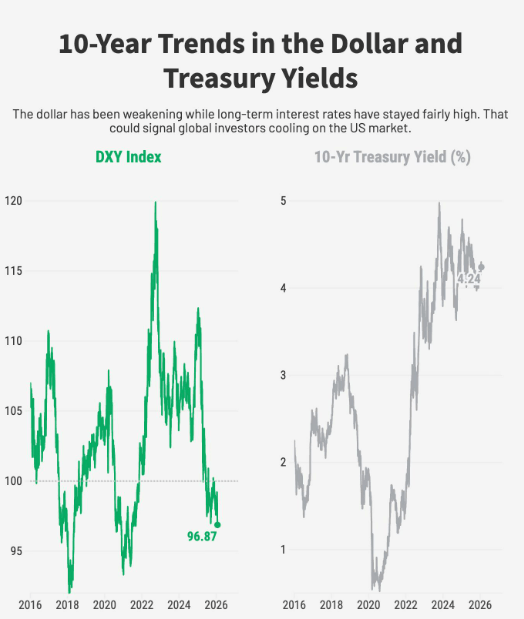
The dollar index reached 100.33, its highest level since July 31, according to Reuters reporting on September 17. The move reflected increased expectations that U.S. interest rates could rise again.
Higher U.S. interest rates can increase the relative appeal of dollar-denominated assets, although exchange rates are influenced by many factors beyond monetary policy.
For emerging-market currencies, the stronger dollar can create additional pressure.
India is watching closely
The Federal Reserve’s decision is particularly relevant for Indian markets because movements in U.S. yields and the dollar can influence foreign capital flows, the rupee and domestic borrowing conditions.
The rupee closed at around ₹95.95 per U.S. dollar on Wednesday, with reports pointing to dollar demand and central-bank intervention as important factors.
Wall Street Takes a Hit
U.S. stocks initially showed a mixed reaction before turning lower after the Fed decision and subsequent comments.
At Wednesday’s close:
- Dow Jones: down about 1.21%
- S&P 500: down about 0.44%
- Nasdaq Composite: down about 0.01%
The Dow lost more than 630 points during the session.
The market reaction suggests that investors were paying close attention not only to the rate hike itself, which had been anticipated, but also to the possibility of additional increases.
Treasury Yields Move Higher
The bond market delivered another important signal.
The 10-year Treasury yield moved around the 5% level, while the more policy-sensitive two-year Treasury yield climbed to its highest level since July 2024.
Reuters reported that the Treasury curve underwent a bear flattening, with short-term yields rising more sharply than longer-term yields.
That is important because Treasury yields influence financing conditions across the economy, including corporate borrowing, mortgages and other credit markets.
What Does It Mean for Borrowers?
For ordinary Americans, the Federal Reserve’s decision can eventually filter through to the cost of borrowing.
Credit cards and other variable-rate debt can respond relatively quickly to changes in interest rates.
Mortgage rates, however, do not simply move one-for-one with the Fed’s policy rate. They are strongly influenced by longer-term Treasury yields and expectations for future inflation and monetary policy.
Current reporting puts the average 30-year mortgage rate around the 7% area, illustrating how expensive housing finance remains.
For savers, higher interest rates can provide a different effect: some deposit accounts and short-term savings instruments may offer higher returns when market rates rise.
Oil Adds Another Layer to the Inflation Story
Energy markets are an important part of the current Fed discussion.
Brent crude fell about 2.7% on Wednesday, while U.S. WTI crude declined roughly 3.2%, according to Reuters reporting.
But oil prices remain elevated, with Brent still around the $105-per-barrel area in Thursday trading.
The energy-price environment matters because sustained increases in fuel and transportation costs can feed into broader consumer prices.
The Fed’s September statement specifically said inflation remains elevated and cited the need to move inflation back toward its 2% goal.
Gold Holds Up as Markets Rebalance
Gold also attracted attention following the Fed decision.
Reuters reported that spot gold rebounded around 1% to approximately $4,305 an ounce on Thursday, even as the stronger dollar created a countervailing force.
Gold’s response illustrates how complicated the current market environment has become.
Investors are simultaneously weighing:
Interest rates + inflation + the dollar + geopolitical risk + energy prices.
That combination can produce sharp moves across asset classes.
What Could the Fed Decision Mean for India?
The impact on India is not limited to the stock market.
A stronger dollar and higher U.S. Treasury yields can affect:
The rupee:
A stronger dollar can increase pressure on emerging-market currencies.
Foreign investment:
Higher U.S. yields can make dollar assets relatively more attractive to global investors.
Indian bonds:
Global yield movements can influence domestic bond-market sentiment.
Import costs:
A weaker rupee can increase the rupee cost of dollar-priced commodities such as crude oil.
Equities:
Indian stocks can respond to changes in global liquidity, foreign flows and currency conditions.
Indian-market reporting on September 17 highlighted the potential pressure from higher U.S. yields and a stronger dollar.
🔎 The Numbers Investors Are Watching
| Indicator | Latest Fed Projection / Market Level |
|---|---|
| Federal funds target | 3.75%–4.00% |
| 2026 Fed funds median projection | 3.9% |
| 2026 PCE inflation projection | 3.7% |
| 2026 unemployment projection | 4.1% |
| Dollar index | Around 100.33 |
| U.S. 10-year Treasury | Around 5% |
| U.S. 2-year Treasury | Around 4.71% |
| Brent crude | Around $105/barrel |
| Gold | Around $4,305/oz |
Fed projections are not promises of future policy; they represent individual policymakers’ assessments of an appropriate policy path based on their economic outlook.
👀 What Comes Next?
The next stage could be even more important than Wednesday’s announcement.
Investors will be watching:
- inflation data;
- employment reports;
- consumer spending;
- energy prices;
- Treasury yields;
- dollar movements;
- geopolitical developments;
- and statements from Federal Reserve officials.
The central bank has made one thing clear: inflation remains above its 2% objective, while policymakers believe the economy is still expanding at a solid pace.
That combination gives the Fed a reason to keep its attention firmly on price pressures even as financial markets adjust to higher borrowing costs.
The Bottom Line
The Federal Reserve’s latest decision has changed the conversation on Wall Street.
The benchmark rate is now 3.75%–4%, the dollar has strengthened, Treasury yields have moved higher and U.S. stocks have come under pressure.
More importantly, the Fed’s projections leave the possibility of another increase later in 2026 on the table.
For investors, businesses and households, the key question now isn’t simply “What did the Fed do?”
It’s:
“How high will U.S. interest rates ultimately need to go to bring inflation back to 2%?”
The answer will depend on the data that arrives over the next several months.
America Newsline will continue tracking the Federal Reserve, Wall Street, Treasury yields, the dollar, gold, oil and the impact on global markets.
EDITOR’S NOTE: This article reflects information available as of September 17, 2026. Market prices can change rapidly. Figures quoted for financial markets represent reported levels at specific times and should not be interpreted as investment advice.