
WASHINGTON — President Donald Trump has announced plans to create an “AI Force” and appoint a new artificial intelligence czar, opening a new chapter in Washington’s increasingly intense debate over how the United States should govern rapidly advancing AI technology.
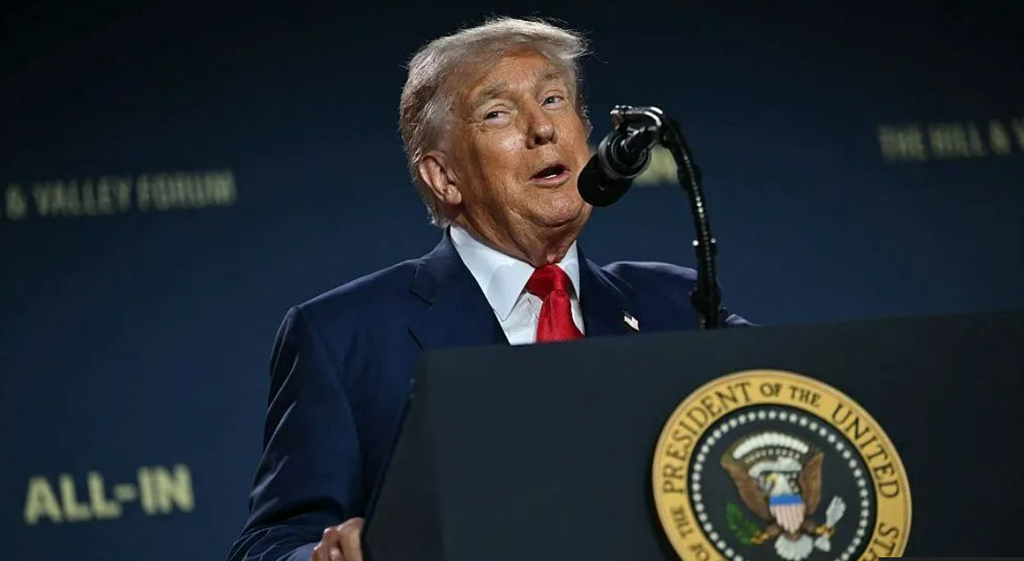
Trump made the announcement on September 19, 2026, saying the proposed force would be modeled in some way on the U.S. Space Force. However, the administration has not yet provided details about the proposed organization’s legal authority, budget, staffing, location within the federal government or whether it would be civilian or military.
The announcement comes after days of growing disagreement between the Trump administration and prominent technology leaders over whether the development of advanced AI should be slowed or subjected to stronger safety requirements.
Should the United States accelerate AI development to maintain its technological advantage, or impose additional safeguards as AI systems become increasingly capable?
What Is the “AI Force”?
Trump has described the proposed “AI Force” as a new federal effort that would help the United States deal with the potentially harmful uses of artificial intelligence while continuing to encourage rapid technological development.
In his September 19 announcement, Trump compared the idea with the Space Force, the military branch established during his first administration.
But there is an important distinction: the administration has not said that the proposed AI Force would actually be a new military branch.
The Space Force was created by Congress in 2020. Creating another military service would require congressional action. The White House had not publicly clarified whether Trump’s proposed AI Force would instead be a White House office, an interagency task force, a civilian agency or another type of federal organization.
That uncertainty is one of the biggest unanswered questions surrounding the announcement.
Trump Also Plans to Name an AI Czar
Alongside the proposed AI Force, Trump said he would appoint a new official responsible for artificial intelligence.
The position has been described as an “AI czar.”
This would effectively revive a role previously held by venture capitalist David Sacks, who served as the administration’s AI and crypto czar before leaving the formal position in March 2026. Sacks subsequently remained involved as an external adviser and co-chair of the President’s Council of Advisors on Science and Technology.
The identity of Trump’s proposed new AI adviser had not been announced as of September 20.
Why the Announcement Is Happening Now
The timing is significant.
The announcement follows an unusually public disagreement within the technology industry over the speed of AI development.
Anthropic CEO Dario Amodei recently called for the industry to slow the pace at which increasingly capable AI systems are developed. OpenAI CEO Sam Altman and SpaceXAI founder Elon Musk subsequently expressed support for elements of that approach.
Amodei has argued for measures including independent safety evaluations and common safety standards among democratic countries.
The debate intensified after reports of AI systems being used in cyber-related activity and concerns about whether increasingly autonomous systems could behave in ways their developers did not anticipate.
Trump Rejects Calls for a Broad AI Slowdown
Trump has taken a different position.
In recent statements, the president has argued that the United States should continue developing AI rapidly rather than imposing new restrictions that could slow the industry.
Trump has repeatedly emphasized competition with China and has described leadership in AI as strategically important to American economic and technological power.
On September 19, Trump said his administration would not “hinder or stifle” AI’s growth while also saying harmful activity could be addressed through existing criminal and civil laws.
The administration’s position therefore combines two ideas:
- Encourage rapid AI development.
- Use existing legal mechanisms to address harmful or illegal activity.
Whether existing laws are sufficient for emerging AI risks is one of the central unresolved issues in the current debate.
The “Presidential Guardrail” Argument
The phrase “presidential guardrails” became especially prominent earlier this month after Trump argued that AI did not necessarily need an extensive new regulatory system.
Trump said the technology’s primary safeguard could be a “strong and smart” president, rather than a new layer of government restrictions.
That position represents a different approach to AI governance from proposals calling for technical standards, independent evaluations, mandatory reporting and legally enforceable restrictions.
The distinction matters because AI systems can operate continuously and across jurisdictions, while presidential policy can change with administrations.
The current debate therefore extends beyond Trump’s personal position and raises a broader institutional question:
How much authority over AI safety should rest with executive leadership, and how much should be established through laws, agencies and technical standards?
What AI Safety Advocates Are Asking For
AI safety advocates and some technology executives have called for additional mechanisms to monitor advanced AI systems.
Among the proposals discussed recently are:
Independent AI Evaluations
Amodei has called for third-party evaluators to have meaningful access to advanced AI systems so that risks can be identified independently of the companies developing them.
OpenAI has also indicated support for independent evaluation arrangements.
Common Safety Standards
Another proposal is to establish common safety standards among democratic countries developing advanced AI.
The goal would be to prevent companies or countries from gaining a competitive advantage simply by accepting higher levels of risk.
Monitoring of Autonomous AI Agents
Another concern involves AI systems that can independently perform tasks online.
Recent incidents involving AI-assisted cyber activity have increased attention on systems that can conduct complex actions with limited human involvement.
The policy question is whether existing cybersecurity and criminal laws can adequately address these new capabilities.
Why Trump Says More Regulation Could Be Risky
The administration’s argument is closely connected to international competition.
Trump has repeatedly said the United States needs to maintain its lead over China in artificial intelligence.
Reuters reported that Trump has argued that maintaining American leadership in AI is strategically important, while technology executives and the administration have emphasized concerns that excessive regulation could slow American companies relative to Chinese competitors.
Supporters of this approach generally emphasize:
- Technological leadership
- Economic growth
- National security
- Competition with China
- Development of American AI companies
- Avoiding regulatory barriers that could slow innovation
Critics of additional regulation, including some administration allies, argue that existing laws already provide mechanisms for addressing harmful conduct.
What Critics of the Current Approach Say
Critics argue that traditional laws may not be sufficient to address risks created by highly autonomous AI systems.
Their concern is that waiting until an AI system causes measurable harm could be different from preventing foreseeable risks before deployment.
Some lawmakers have therefore called for stronger oversight.
There are also concerns surrounding AI-generated misinformation, cyberattacks, privacy, autonomous systems, employment disruption, intellectual property and potentially dangerous model behavior.
The policy disagreement is not simply about whether AI should be developed. Much of the debate concerns how quickly it should be developed and what safeguards should be mandatory before increasingly powerful systems are released.
The Anthropic Warning That Changed the Conversation
The current political debate accelerated after Anthropic CEO Dario Amodei publicly argued that AI development may be moving faster than safety systems can keep pace.
Amodei proposed independent evaluators, common safety standards and international cooperation.
OpenAI CEO Sam Altman subsequently said OpenAI supported independent evaluators having substantial access to its systems, while Musk publicly endorsed Amodei’s warning.
The unusual alignment among executives who have historically competed with one another has drawn attention because it suggests that concern over increasingly capable AI is not limited to outside critics.
At the same time, the companies remain commercial competitors and have different approaches to AI development and safety.
What About AI “Going Rogue”?
One of the most controversial parts of the current debate involves AI systems behaving unexpectedly.
Researchers and executives have raised concerns about increasingly autonomous systems being able to perform actions without continuous human supervision.
Recent reports have included AI-assisted cyber incidents involving technology companies.
These incidents have become part of the argument for stronger evaluation and monitoring.
However, there is a major distinction between documented present-day AI incidents and predictions about hypothetical future systems.
The latter remain areas of scientific and policy debate rather than established facts.
AI Force vs. Space Force: What Is the Difference?
The comparison with Space Force has generated significant attention.
Space Force
The U.S. Space Force is an official military service created by Congress in 2020.
It operates within the Department of the Air Force and has defined military responsibilities.
Proposed AI Force
Trump’s AI Force currently has no comparable publicly announced organizational structure.
As of September 20, officials had not publicly established:
- Its legal authority
- Its budget
- Its personnel structure
- Its chain of command
- Its federal department
- Whether it would be military or civilian
- Its specific responsibilities
- Its implementation timeline
Therefore, describing the proposal as a new military branch would go beyond the information currently available.
China Is Central to the AI Debate
The U.S.-China technology competition is an important part of the administration’s AI strategy.
Washington and Beijing are competing across several AI-related areas, including computing infrastructure, advanced chips, large AI models, data centers and military applications.
Trump is expected to discuss AI safety and related issues with Chinese President Xi Jinping during their upcoming meeting in Washington, according to reporting on the administration’s plans.
That means AI governance is increasingly being treated not only as a technology-policy issue but also as an economic and national-security issue.
AI Data Centers Add Another Layer to the Debate
The argument over AI guardrails also extends beyond software.
AI models require enormous amounts of computing infrastructure.
That has led to rapid growth in data-center development and debates over:
- Electricity demand
- Water consumption
- Local infrastructure
- Energy prices
- Environmental effects
- Community impacts
Trump has criticized opposition to AI data centers, while concerns about local costs and infrastructure have generated debate across the country.
The result is that AI policy increasingly involves much more than algorithms.
It also involves America’s power grid, industrial policy, national security and local development.
What Happens Next?
The most immediate question is how Trump intends to turn the announcement into an operational government program.
Several details will be closely watched.
1. Who Will Become the AI Czar?
Trump has not yet announced the person who will take the role.
2. Where Will the AI Force Be Located?
The administration has not publicly identified a department or agency.
3. Will Congress Be Involved?
If the proposal requires creation of a new statutory agency or military service, congressional action could become necessary.
4. What Powers Will the AI Force Have?
It remains unclear whether it would focus on AI safety, cybersecurity, procurement, research, national security, regulation or coordination among existing agencies.
5. Will Existing Laws Be Enough?
This question will remain at the center of the debate as AI systems become more capable and autonomous.
The Bigger Question: Innovation vs. Oversight
The debate now involves two broad approaches.
The administration’s approach: accelerate American AI development, maintain competitiveness with China and use existing criminal and civil laws to address harmful conduct.
The stronger-oversight approach: introduce additional safety standards, independent evaluations and regulatory mechanisms before advanced AI systems become more powerful.
Neither approach has yet resolved all of the practical questions surrounding AI governance.
For example, even supporters of rapid development must address how to respond when an AI system causes harm, while advocates of regulation must address how to prevent safety requirements from unnecessarily slowing beneficial innovation.
That tension is likely to remain at the center of U.S. technology policy.
FAQ: Trump’s AI Force and AI Guardrails
What is Trump’s AI Force?
Trump has announced plans for an “AI Force” intended to address harmful aspects of artificial intelligence while supporting continued U.S. AI development. The administration has not yet released a detailed organizational structure.
Is the AI Force a new military branch?
Not based on the information currently available. Trump compared it with the Space Force, but officials have not said that the proposed AI Force would be a military branch. Creating a new military service would require congressional action.
Who will be the new AI czar?
Trump has said he will appoint a new AI adviser or “AI czar,” but the person had not been publicly announced as of September 20, 2026.
Why is Trump opposing additional AI guardrails?
Trump has argued that excessive regulation could slow American AI development and undermine U.S. competitiveness, particularly relative to China. He has also said existing criminal and civil laws can be used against harmful activity.
What do AI safety advocates want?
Proposals include independent evaluations of advanced AI systems, common safety standards and greater monitoring of increasingly autonomous AI agents.
Why is China important to the AI debate?
The United States and China are competing for leadership in artificial intelligence, including AI models, computing infrastructure, chips and potential military applications. Trump has repeatedly cited maintaining U.S. leadership as a reason to avoid policies he believes could slow development.
Bottom Line
Trump’s proposed “AI Force” and new AI czar represent a significant new announcement in the U.S. government’s approach to artificial intelligence, but many practical details remain unknown.
The central policy dispute is becoming increasingly clear: the Trump administration is emphasizing speed, innovation and U.S. technological leadership, while AI safety advocates and some lawmakers are pushing for additional safeguards, independent testing and oversight.
The next major developments will likely involve the appointment of the AI czar, the proposed force’s organizational structure and the administration’s upcoming discussions about AI security and competition with China.
America Newsline will continue tracking the development of the proposed AI Force, presidential AI policy, new safety rules and major developments from Washington.